
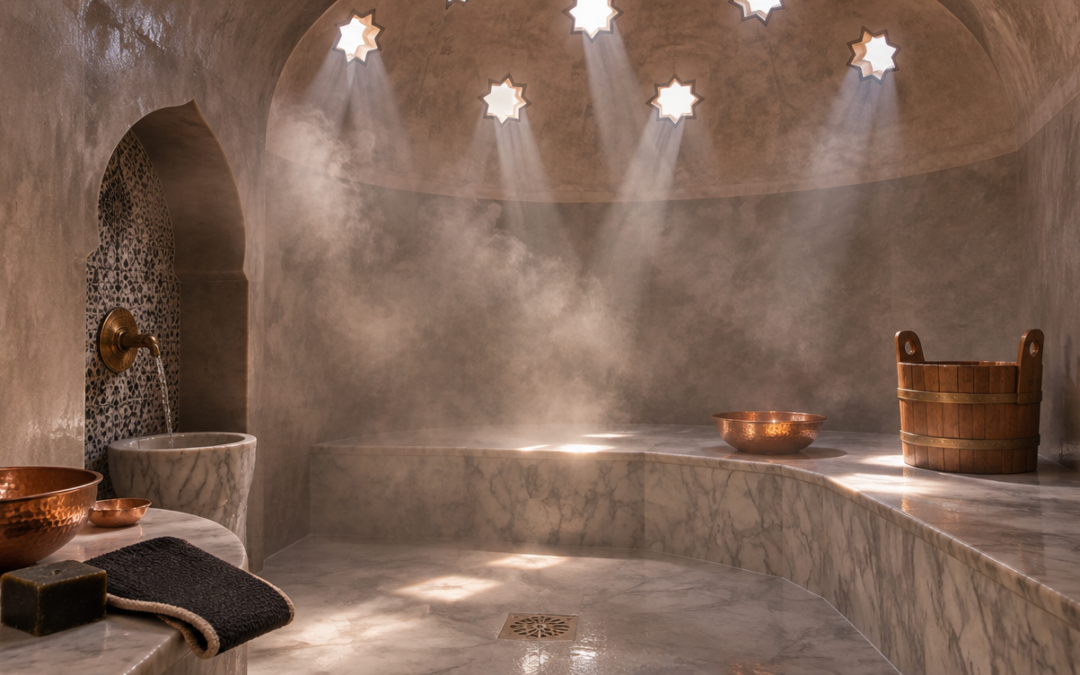
Few things say “you have arrived in Morocco” quite like your first scrub in a steam room. If you are wondering what to expect at a hammam in Marrakech, this guide walks you through it step by step: the difference between a local public hammam and a spa, what to wear, what happens on the heated floor, how much to budget and the small bits of etiquette that make the experience relaxed instead of awkward. Whether you are a nervous first-timer or simply want to do it properly, you will leave cleaner than you have ever felt.
What a Hammam Actually Is
A hammam is a traditional steam bath, a descendant of the Roman and Ottoman bathhouses. In Marrakech it has always been a weekly ritual rather than a luxury. Many families did not have hot running water at home, so the neighbourhood hammam, usually built next to the mosque, the bakery and the fountain, was where people washed, chatted and caught up on news.
The building usually has a sequence of rooms that get progressively warmer. You move from a changing area to a warm room and then into the hot room, where steam rises from a heated floor fed by a wood fire. The goal is simple: open the pores with heat, soften the skin with black soap, then scrub away dead skin with a rough glove called a kessa.
Even today, locals see the hammam as hygiene, relaxation and social time all in one. Visiting one is a small window into everyday Marrakchi life.
Public Hammam vs Spa Hammam: Which One Should You Choose?
Marrakech offers two very different hammam experiences, and choosing the right one matters more than anything else on this list.
The local public hammam
This is the authentic neighbourhood bathhouse. Men and women bathe separately, either in separate buildings or at different times of the day. The setting is plain and functional, the atmosphere is lively and the entry fee is very low, often the price of a coffee or two. You bring your own supplies, and you can pay an attendant (a tayeba for women, a kessal for men) to scrub you for a small extra tip.
It is the most memorable option for curious travellers, but it can feel intimidating. Nobody explains the rules, little English may be spoken, and the scrub is vigorous.
The spa or riad hammam
Spa hammams are designed for visitors. You get a private or semi-private steam room, a calm candlelit setting, towels, slippers and a therapist who guides you through every step. Many add a clay wrap, a massage with argan oil and mint tea afterwards. Prices are much higher, typically ranging from a modest sum for a basic ritual in a small riad to considerably more in a luxury spa.
Many riads have their own small hammam on site, which is the easiest introduction of all. Some guests choose their accommodation partly for this reason; you can browse riads with a hammam on Riadway, the riad booking site we recommend.
What to Expect at a Hammam in Marrakech, Step by Step
The order can vary slightly, but almost every hammam in Marrakech follows the same basic ritual. Knowing it in advance takes away most of the nerves.
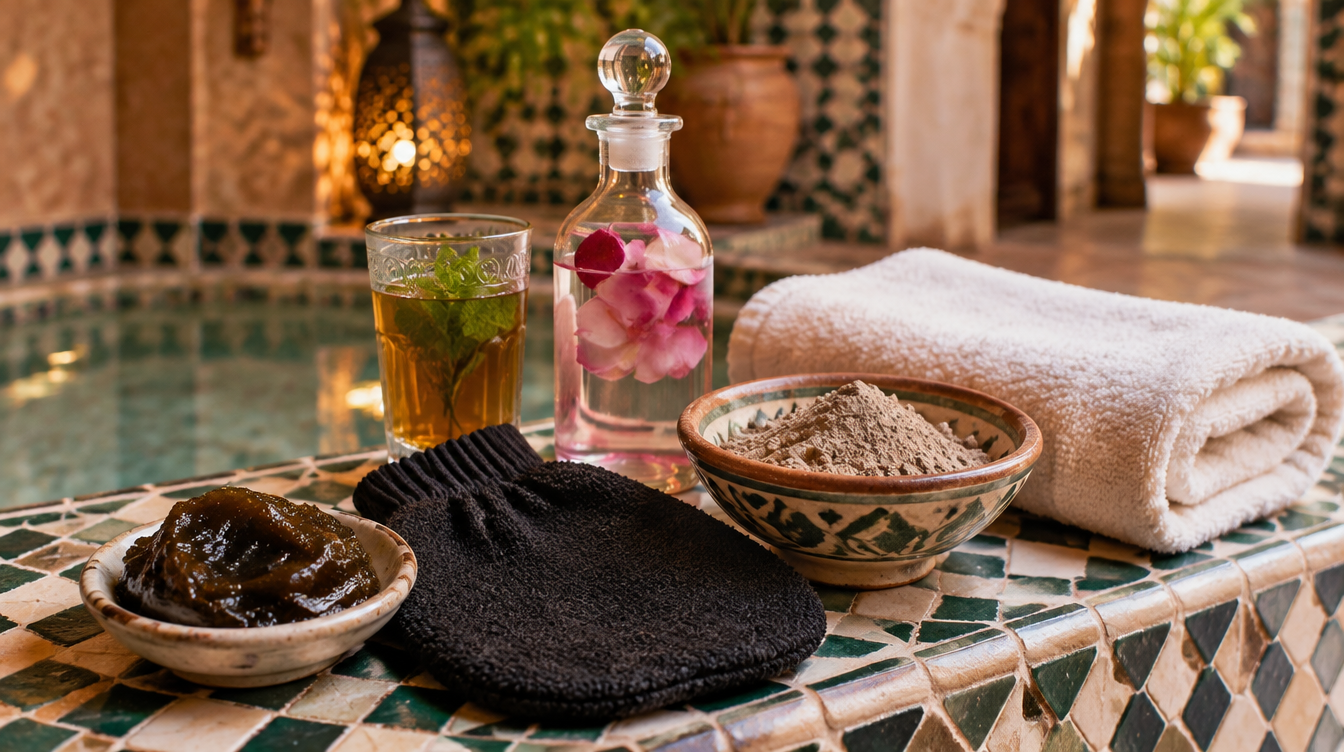
- Undress and settle in. You change in the entrance area and walk into the warm room. Sit or lie on the heated floor or a marble bench for 10 to 15 minutes to let the steam work.
- Black soap. Your skin is covered with savon beldi, a gel-like soap made from olives. Leave it on for several minutes, then rinse with warm water poured from a bucket.
- The scrub. This is the famous part. Using the kessa glove, the attendant scrubs your whole body with firm strokes. Expect to see grey rolls of dead skin. It is normal, slightly embarrassing and oddly satisfying.
- Rinse and clay. After another rinse, many hammams apply ghassoul, a mineral clay from the Atlas Mountains, to the body and hair.
- Final rinse and rest. You are rinsed one last time, wrapped in a towel and invited to rest. In spas this is often followed by a massage and tea.
The whole process takes around 45 minutes to an hour, longer if you add a massage. Tell the attendant if the scrub is too strong; a simple “shwiya” (gently) works wonders.
What to Wear and What to Bring
This is the question first-timers ask most. The answer depends on where you go.
In a public hammam, women usually keep their underwear bottoms on and men wear underwear or swim shorts. Full nudity is not the norm. Bring a spare pair of underwear so you have something dry to change into.
In a spa hammam, you will normally be given disposable underwear, and the therapist will cover you with towels where appropriate. If you prefer to keep your swimsuit on, just say so. Choose an old one, as black soap and clay can stain light fabrics.
For a public hammam, pack the following (most items are sold cheaply in small shops near the entrance):
- Black soap (savon beldi) and a kessa glove
- Shampoo and a small comb
- A towel and flip-flops
- A plastic mat or small stool to sit on (optional but handy)
- A change of underwear and a bag for wet items
- Some small coins for the entrance, the attendant and a tip
Hammam Etiquette: The Unwritten Rules
Hammams are relaxed places, but a few habits will help you blend in and show respect.
- Keep your voice moderate. Chatting is normal in public hammams, but shouting is not.
- Do not take photos. Never use your phone inside the bathing rooms, even if they look empty.
- Share the water. In public hammams, buckets and taps are shared. Fill up, step aside and let others use them.
- Accept a little help. Locals sometimes offer to scrub your back or show you what to do. It is a friendly gesture.
- Tip the attendant. A tip is expected for the person who scrubs you, in both public and spa hammams.
- Respect the schedule. In mixed-use public hammams, check which hours are for women and which for men before you go.
Health tips and when to skip it
The heat is intense, so a little common sense goes a long way. Drink plenty of water before and after, avoid going on a full stomach and leave the hot room if you feel dizzy.
Talk to your doctor first, or choose a gentle spa ritual without the hottest room, if you are pregnant, have heart or blood pressure problems or have sensitive or recently sunburned skin. Avoid shaving or waxing on the same day, since the scrub can irritate freshly shaved skin. Many travellers plan their hammam toward the end of a trip, or right after a dusty excursion to the desert or the mountains, when it feels most rewarding.
Making It Easy: Hammams Inside Riads
If the idea of a public bathhouse feels like too much, a riad with its own hammam is the gentlest way in. You walk downstairs in a bathrobe, the steam room is often reserved just for you, and you can retreat to a quiet patio afterwards instead of facing the busy streets.
Riads in calmer quarters of the medina pair especially well with a slow hammam afternoon. For example, our guide to Riad les Jardins des Lilas describes a peaceful riad in the Sidi Ben Slimane quarter with a plunge pool and rooftop terrace, a good base to unwind after the steam. You can also explore our selection on the Our Riads page, and if you visit in winter, our article on Marrakech in December explains why a warm hammam is such a treat on chilly evenings.
FAQ: Hammams in Marrakech
Can couples go to the hammam together?
Not in public hammams, where men and women are always separated. Many spa and riad hammams, however, offer couple rituals in a private room.
How often can I go during my trip?
Once is enough for most visitors because the kessa scrub is quite intense. If you love it, leave at least a few days between scrubs so your skin can recover.
Do I need to book in advance?
Public hammams do not take bookings; you simply walk in during opening hours. Spa hammams and riad hammams should be booked a day or more ahead, especially at weekends and in high season.
Conclusion
Now you know what to expect at a hammam in Marrakech: heat, black soap, a serious scrub and a deep sense of calm afterwards. Choose a public hammam if you want an authentic local moment and do not mind a little confusion, or a spa or riad hammam if you prefer comfort and guidance. Either way, bring an open mind, drink plenty of water and leave time to relax afterwards. It might just become your favourite memory of the Red City.